
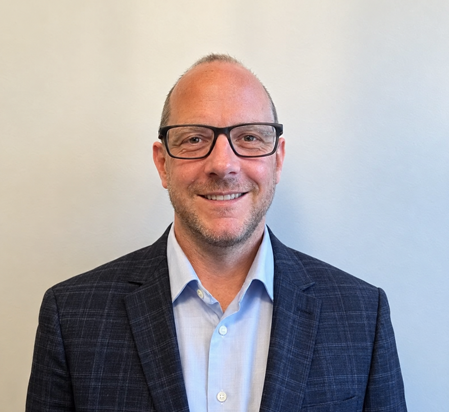
Steffen Manz
CEO / Founder
Speed Global Logistics
Steffen Manz: The Most Visionary CEO Shaping the Future of Global Logistics 2026
Building a new standard for freight forwarding through global expertise, entrepreneurial agility, and a commitment to being there when supply chains become complicated
Global logistics is an industry defined by movement, but its greatest challenges often emerge when that movement stops. A missed connection, a customs complication, a cancelled flight, a delayed container, or an unexpected geopolitical disruption can quickly transform a routine shipment into a complex business problem.
For Steffen Manz, Founder and CEO of Speed Global Logistics, these challenges represent more than operational obstacles. They reveal what a logistics partner is truly made of.
With close to three decades of experience across international logistics markets, including the United States, Malaysia, and Europe, Manz has developed a perspective shaped by both operational experience and entrepreneurship. His philosophy is straightforward: freight forwarding should not be limited to moving cargo. It should be about understanding a customer’s business, anticipating challenges, designing the right solution, and taking ownership from beginning to end.
This philosophy lies at the heart of Speed Global Logistics and its distinctive identity as “Logistics Architects.”
For Manz, the ambition is not simply to build a larger company. It is to build a better one.
A Career Built from the Ground Up
Manz’s professional journey began at the operational level, where he learned the logistics business through its details.
That early experience taught him an important lesson: in logistics, seemingly small details can have enormous consequences. Documentation, customs, communication, connections, transportation schedules, and coordination all have the potential to influence an entire supply chain.
Over nearly three decades, working across different countries, cultures, and transportation markets broadened his understanding of what makes supply chains succeed—and what causes them to fail.
His experiences in the United States, Malaysia, and Europe also reinforced another principle: although transportation operates globally, business remains deeply personal.
Customers in different countries and industries have different expectations. Successful logistics providers therefore need more than transportation knowledge; they need cultural awareness, responsiveness, adaptability, and the ability to understand the business behind every shipment.
Eventually, those experiences led Manz toward entrepreneurship.
He saw an opportunity to create a freight-forwarding organization that could combine international expertise with the responsiveness, accountability, and entrepreneurial mindset of a boutique company.
That vision became Speed Global Logistics.
Building the organization from the ground up became another education in leadership. For Manz, leadership is not about having every answer. It is about building the right team, making decisions despite incomplete information, accepting responsibility when things go wrong, and continuously raising the standard.
The Philosophy of a Logistics Architect
At Speed Global Logistics, the mission is clear: to make global logistics simpler, smarter, and more reliable.
Manz believes the traditional freight-forwarding model can become too transactional. Customers do not simply need someone to book a vessel, arrange an airline shipment, or coordinate a truck.
They need someone who understands their business.
This is where the concept of Logistics Architects becomes central to his leadership philosophy.
An architect considers the structure as a whole before designing its individual components. Speed Global Logistics applies the same thinking to supply chains.
Customer objectives, trade lanes, transportation modes, customs requirements, timing, cost, risk, and operational requirements all form part of the larger picture. Rather than treating these as disconnected elements, the company seeks to design solutions around the entire structure.
The result is an approach centered on partnership rather than transactions.
Manz’s vision is to build the freight-forwarding boutique that customers and partners can rely on 100%, regardless of how challenging the situation becomes.
That means bringing together global capabilities with the speed, flexibility, and personal accountability traditionally associated with a boutique organization.
Where Challenges Become the Real Test
Few industries demonstrate uncertainty as clearly as logistics.
Ports can close. Flights can be cancelled. Containers can be delayed. Customs can create unexpected complications. Geopolitical events can reshape trade lanes, while customer requirements can change with little notice.
Manz does not believe uncertainty can be eliminated.
Instead, organizations must learn how to respond to it.
Preparation, relationships, communication, and accountability therefore sit at the center of his approach. When something goes wrong, he believes the worst response is to disappear behind an email or shift responsibility elsewhere.
The better response is to communicate directly, explain what is happening, outline what is being done, and remain involved until the problem is resolved.
This philosophy reflects a broader belief about entrepreneurship: resilience is not simply about surviving difficult periods. It is about remaining committed to the long-term vision while being flexible enough to adapt along the way.
For Manz, difficult situations can ultimately reveal the difference between an ordinary service provider and a genuine partner.
“Anyone can look good when everything goes according to plan. The real test of a logistics partner is what happens when the plan falls apart.”
Success Measured Beyond Awards
Speed Global Logistics has developed strong international capabilities and a growing North American footprint, with particular expertise across Europe and Asia-Pacific trade.
The company has earned the trust of customers handling complex, time-sensitive, and high-value logistics requirements. Long-term business relationships have also become important milestones for Manz because they demonstrate that customers see the organization as more than a transportation vendor.
Industry recognition has added another dimension to that journey.
Among the notable recognitions are being named by Supply & Demand Chain Executive as a Pros to Know / Top Transportation Innovator and receiving a Gold Stevie Award through the American Business Awards.
Yet Manz places the greatest emphasis elsewhere.
For him, the team’s development represents one of the company’s most meaningful achievements.
“Our team is the engine of Speed Global Logistics. Without that engine, there is no Speed Global Logistics.”
This perspective reveals an important aspect of his leadership. Revenue, customers, and awards may provide visible measures of progress, but the people behind the organization determine whether that progress can be sustained.
Leadership Through People, Trust, and Responsibility
Manz’s approach to leadership extends beyond business performance.
He sees growth as an opportunity to develop people, create careers, and prepare future leaders.
His belief is that technology and digitalization may continue to transform logistics, but relationships will remain fundamental to the industry. When unexpected challenges arise, the value of trusted networks becomes particularly clear.
That is why he encourages professionals to build relationships before they need them.
He also encourages the next generation of logistics professionals to learn the business from the ground up.
Understanding how freight actually moves—from customs and documentation to carriers, ports, airports, warehouses, contracts, and costs—is essential. At the same time, professionals must understand the customer’s business and the larger commercial picture.
For Manz, expertise comes from being able to see both the big picture and the smallest operational details.
His advice extends further: challenge established ways of working, protect your reputation, and recognize that knowledge, relationships, and reputation are long-term assets.
“Build those three, and opportunities will find you.”
Building the Next Chapter of Global Logistics
The next chapter for Speed Global Logistics is focused on continued growth across North America.
The company is strengthening its existing operations while expanding its geographic footprint, including plans involving Toronto and Vancouver. It is also continuing to develop capabilities across air freight, ocean freight, customs, and specialized logistics solutions.
Alongside geographic growth, Speed Global Logistics is investing in the infrastructure and organizational structure needed to support larger customers and increasingly complex international supply chains.
Technology and visibility capabilities are another important part of that evolution, with the objective of giving customers better information, faster decision-making, and greater control over their supply chains.
But for Manz, the larger project goes beyond expansion.
It is about building an organization for the next decade.
He does not want Speed Global Logistics to become simply another successful freight forwarder. His ambition is for the company to change the expectations customers have of what a freight-forwarding partner can be.
When shipments are straightforward, the company should execute exceptionally well.
When circumstances become complicated, customers should know exactly who they want on their side.
That is the standard Manz is working to establish.
A Vision Beyond Growth
The future of logistics will undoubtedly be shaped by technology, global trade dynamics, changing customer expectations, and increasingly complex supply chains. But technology alone cannot create trust, and scale alone cannot guarantee accountability.
Steffen Manz’s vision places those human elements at the center.
His leadership reflects a belief that global capability and personal accountability do not have to be opposites. A company can operate across international markets while remaining responsive. It can embrace technology while preserving human relationships. It can pursue growth without losing sight of the people who make that growth possible.
That is ultimately what makes his vision distinctive.
For Manz, the goal is not simply to move more freight.
It is to build a logistics organization capable of thinking ahead, responding decisively, and standing beside its customers when circumstances become difficult.
And perhaps that is the clearest expression of the future he is working to shape: global logistics that is not only faster and smarter, but more dependable when it matters most.
Inspiring the Next Generation of Changemakers
Steffen Manz’s journey demonstrates that visionary leadership is not always about predicting exactly what the future will look like. Sometimes, it is about building an organization capable of responding to whatever the future brings.
From learning logistics at the operational level to founding and leading Speed Global Logistics, his career has been shaped by continuous learning, resilience, relationships, and a willingness to challenge conventional approaches.
His message to aspiring professionals is equally direct: learn the business, build relationships, challenge outdated processes, and protect your reputation.
Above all, build something people can trust.
For Steffen Manz, that is the real measure of leadership—and the foundation upon which he intends to shape the next chapter of global logistics.