
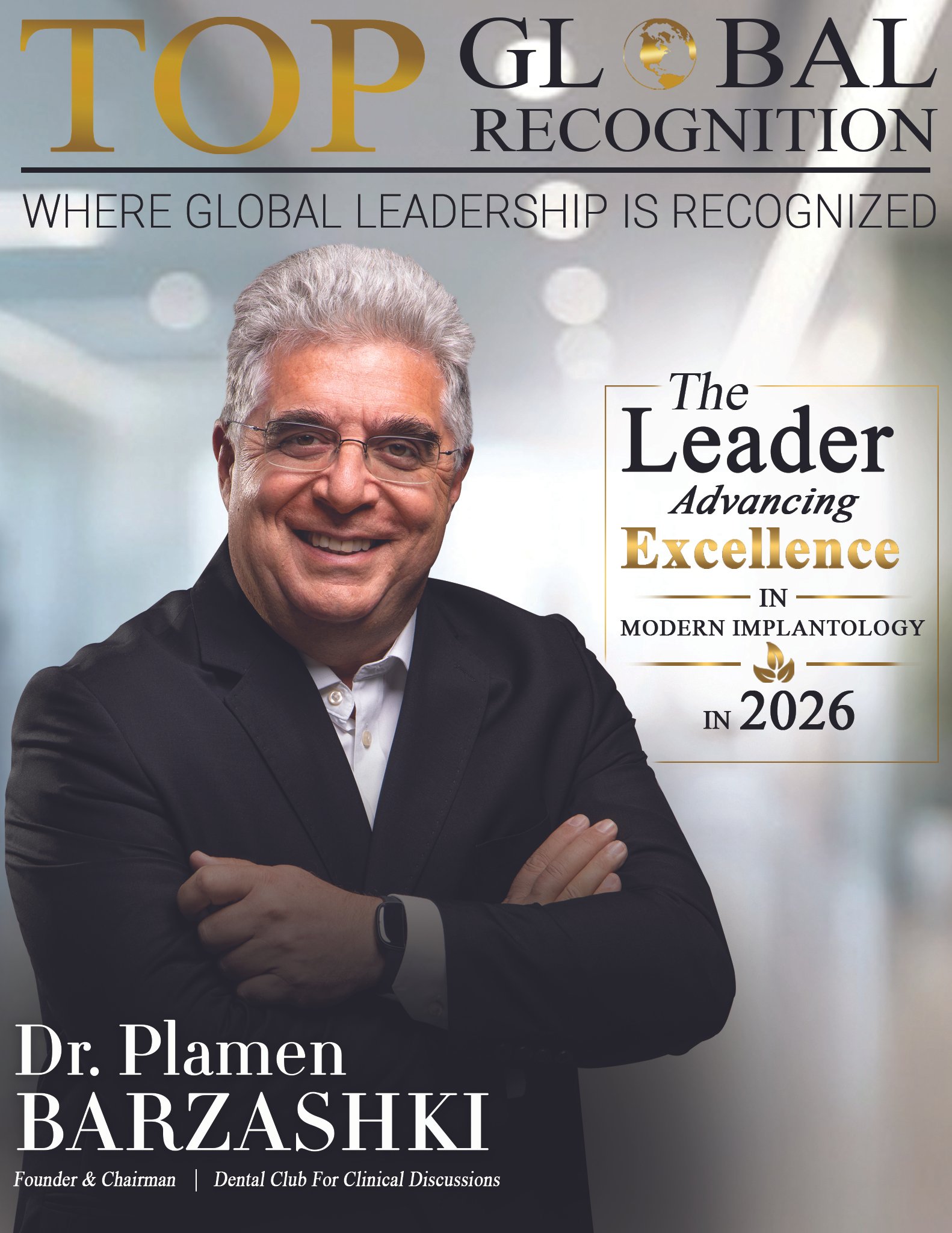
Dr. Plamen Barzashki
Founder & Chairman
Dental Club for Clinical Discussions
Dr. Plamen Barzashki: Turning Complex Implantology into Shared Expertise
Through advanced implant surgery, digital innovation, and international education, Dr. Plamen Barzashki is helping dental professionals approach complex cases with greater knowledge, precision, and confidence.
For patients facing severe tooth loss or advanced bone deterioration, dental treatment can involve challenges that go far beyond replacing missing teeth. These cases often require specialised surgical knowledge, detailed planning, and a clear understanding of how to achieve lasting results. For Dr. Plamen Barzashki, a dental implantologist and periodontal surgeon with more than three decades of experience, addressing these challenges has become both a clinical pursuit and an opportunity to educate others.
His work extends beyond individual procedures. As lead implantologist across a network of dental clinics and an educator who has trained more than 1,000 dental professionals through over 150 courses, he is committed to sharing the knowledge required to manage demanding implant cases. By bringing together regenerative surgery, digital planning, and professional education, Dr. Barzashki is helping connect specialist expertise with a wider community of clinicians.
A Career Shaped by Purpose and Learning
Dr. Barzashki’s interest in dentistry began with a personal experience. During his youth, he witnessed a relative struggle with the consequences of untreated dental disease. The effect on that person’s everyday life stayed with him and influenced his decision to pursue a profession focused on restoring oral health and preventing suffering.
After graduating in dental medicine in 1990, he became increasingly interested in implantology, a developing speciality in Bulgaria at the time. Its potential to restore chewing function, speech, and confidence offered a meaningful direction for his career.
Determined to develop his expertise, he pursued advanced training internationally. He studied regenerative techniques with Professor Marcus Hürzeler, interdisciplinary case planning with Professor André Sadoun, and aesthetic and regenerative surgery with István Urban. Further education in Germany, France, Switzerland, and Hungary expanded his understanding of surgical planning and tissue regeneration.
These experiences helped shape his approach to complex treatment. For Dr. Barzashki, successful implantology requires more than technical precision. It depends on understanding the patient’s condition, evaluating the available bone and soft tissue, and developing a treatment plan that considers both immediate needs and long-term stability.
Managing the Most Challenging Cases
A significant part of Dr. Barzashki’s clinical work involves patients with severe bone loss, difficult anatomy, or complications from previous implant procedures. According to his supplied professional profile, more than 90% of his patients present with such challenges, and many are referred by other dental professionals.
These cases demand careful coordination between diagnosis, surgery, and restorative planning. Advanced periodontitis, insufficient bone volume, and previous treatment failures can make conventional implant placement unsuitable without additional procedures.
One illustrative case involved a patient who had lost almost all their teeth following advanced periodontal disease. Treatment required vertical and horizontal ridge augmentation, sinus lifts, and digitally guided implant placement. Three-dimensional printed surgical guides supported the procedure, while biomimetic grafting techniques were used to reconstruct the deficient bone.
The goal was to restore the patient’s ability to chew and speak comfortably while improving confidence in everyday life. Cases like this demonstrate the importance of combining surgical expertise with detailed planning and an understanding of biological healing.
They also reinforce a broader lesson: when complex knowledge remains limited to a small number of specialists, access to advanced treatment can be restricted. Sharing techniques and clinical experience can help more professionals recognise difficult cases, understand available options, and determine when specialist support is necessary.
Building Consistency Across Clinics
Dr. Barzashki’s approach to shared expertise is reflected in his work across nine clinics in Bulgaria, the Czech Republic, and Zanzibar. His professional network includes Denta Style in Plovdiv, LARGO Dental Clinic in Sofia, and White Clinic in Prague, alongside practices in several Bulgarian cities. He is also associated with North Valley Hospital in Zanzibar, which he founded in 2018.
Maintaining consistent clinical standards across different locations requires clear protocols, communication, and continuous professional development. The network’s approach includes shared treatment-planning practices, digital records, regular audits, training sessions, and online consultations.
These systems help clinical teams work towards common standards rather than relying exclusively on individual experience. They also create opportunities for knowledge exchange, allowing clinicians to discuss challenging cases and learn from one another.
For Dr. Barzashki, this model reflects the value of building systems around expertise. A strong clinical network should not simply expand the availability of services; it should support consistent decision-making, responsible treatment, and continuing improvement.
Education That Extends Beyond the Operating Room
Professional education is central to Dr. Barzashki’s work. Through more than 150 courses, he has trained over 1,000 dental professionals, combining theoretical learning with hands-on sessions, demonstrations, and live clinical cases.
His teaching focuses on the practical decisions that shape treatment outcomes: selecting suitable cases, evaluating risks, understanding surgical limitations, and coordinating different stages of care. These skills are particularly important in advanced implantology, where a successful outcome depends on more than the execution of a procedure.
Dr. Barzashki is an exclusive trainer for Camlog and a certified trainer for TRATE and OXY. He also collaborates with EMS, Geistlich, and Allodyn, contributing clinical feedback on products and techniques.
His educational work includes PiezoDrilling technology by MECTRON, which uses piezoelectric techniques for bone preparation. Such methods can be relevant to procedures involving sinus lifts, ridge augmentation, and bone grafting, where precision and the protection of surrounding tissues are important.
He also founded the Dental Club for Clinical Discussions, a forum where dental professionals can present challenging cases, exchange perspectives, and learn collaboratively. By creating opportunities for ongoing discussion, the initiative extends education beyond formal courses and encourages clinicians to keep developing their judgement.
Combining Digital Technology with Clinical Judgement
Digital tools are changing the way dental professionals diagnose conditions and plan treatment. Dr. Barzashki’s approach incorporates cone-beam computed tomography, digital planning, AI-assisted diagnostics, and three-dimensional printed surgical guides.
These technologies can help clinicians assess anatomy, plan implant positioning, and anticipate surgical challenges before treatment begins. They offer useful support, particularly when a case involves significant bone loss or requires several procedures to be coordinated.
However, technology alone cannot guarantee a successful result. Implantology remains dependent on biological factors, including tissue health, bone regeneration, healing, and the patient’s individual circumstances. Digital tools must therefore complement clinical knowledge rather than replace it.
Dr. Barzashki is also exploring developments in AI-supported diagnostics and robotic-assisted implantology. Their long-term value will depend on appropriate training, careful evaluation, and evidence of practical benefits for clinicians and patients.
His approach reflects the importance of combining innovation with responsibility. New techniques should be assessed carefully and adopted when they offer meaningful value within a sound clinical framework.
Dentistry with a Human Purpose
For Dr. Barzashki, dentistry is not simply a technical discipline. Treatment affects how people eat, speak, interact, and feel about themselves. Understanding these concerns is an important part of developing an appropriate treatment plan.
His philosophy brings together scientific rigour, individualised care, and interdisciplinary collaboration. Surgical decisions must account for periodontal health, prosthetic requirements, biological conditions, and the patient’s expectations. Recognising these connections helps clinicians approach treatment more comprehensively.
This belief also underpins his commitment to lifelong learning. The techniques and technologies used in dentistry continue to develop, making it essential for professionals to question established practices, learn from experienced mentors, and remain open to new evidence.
Expanding Access to Care in Zanzibar
In 2018, Dr. Barzashki founded North Valley Hospital in Zanzibar as part of his effort to improve access to modern dental services. What began as a volunteer initiative developed into a permanent facility providing free dental care to people with limited access to treatment.
The initiative also focuses on training local professionals so that knowledge and skills remain within the community. Working in a setting with infrastructure limitations, logistical challenges, and different cultural circumstances required cooperation with local people and practical solutions adapted to local needs.
This emphasis on local capacity is important to the long-term sustainability of healthcare. Training professionals and supporting local expertise can help communities benefit beyond individual visits by outside clinicians.
His wider vision includes approaches such as mobile clinics, teledentistry, and further professional education to help reach underserved populations.
Recognition and the Road Ahead
Dr. Barzashki’s supplied biography lists several international recognitions, including inclusion in the Regent Top 100 World Doctors ranking in 2023 and recognition among the Global Dental Innovators to Watch in 2025. His work has also been featured in publications including Conglomerate Magazine, The BUSINESS Legacy, Founders ERA, and EntrepreneursECHO.
Looking ahead, he plans to continue developing minimally invasive regenerative implantology education, explore emerging dental technologies, and expand educational and humanitarian initiatives into additional regions, including parts of Africa and Southeast Asia.
For young dentists, his advice centres on careful case selection, honest risk assessment, mentorship, and the responsible use of digital tools. He also sees teaching as an important way to strengthen one’s own understanding: explaining a procedure requires a clinician to examine the reasoning behind every decision.
Dr. Plamen Barzashki’s professional journey brings together advanced clinical practice, continuing education, and a commitment to wider access to care. His contribution lies not only in managing complex cases, but also in helping other professionals develop the knowledge to approach them responsibly.
By turning individual experience into shared expertise, he is working towards a future in which more clinicians can learn, more communities can build local capacity, and more patients can access appropriate dental treatment with confidence and dignity.