
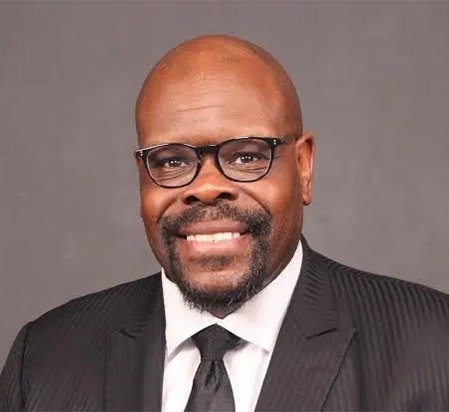
Dr. Santarvis Brown: Reimagining Education Through Inclusion, Purpose, and Human Connection
For Dr. Santarvis Brown, meaningful change has never been about making the biggest statement. It has been about creating the moments, opportunities, and relationships that help people believe in what is possible.
Some of the most meaningful forms of change do not happen on a stage.
They happen in classrooms when a student finally finds the confidence to speak. They happen when an educator begins to question an old way of doing things. They happen in community conversations where someone realizes that their experience matters and that their voice deserves to be heard.
These are the moments that have shaped the work of Dr. Santarvis Brown.
His professional journey has taken him across education, leadership, and social development, but the thread connecting each chapter is remarkably consistent: a belief that people should not have to fit themselves into systems that were never designed with their realities in mind.
For Dr. Brown, education has the power to do more than transfer knowledge. It can create belonging, open doors, strengthen confidence, and give individuals the tools to participate more fully in their communities and their own futures.
That belief has become the foundation of his approach to leadership.
A Perspective Shaped by Lived Experience
Dr. Brown’s understanding of education did not begin with theory.
It was shaped by what he observed around him while growing up—the ways in which opportunity could differ from one person to another, sometimes not because of ability or ambition, but because of access, representation, and support.
Those observations stayed with him.
Over time, they led him to consider a larger question: what role should education play in addressing these differences?
For Dr. Brown, the answer was never simply to make learning more accessible. It was also about making people feel that they belonged within the learning environment.
Knowledge matters, but so does the environment in which that knowledge is gained. Structure matters, but so does compassion. Achievement matters, but so does the confidence that allows someone to believe they are capable of achieving in the first place.
That understanding would eventually influence the way he approached education, leadership, and community engagement.
Choosing Education as a Path to Possibility
Dr. Brown’s move into education was driven by a desire to help build systems that respond to people rather than asking people to constantly adapt to rigid structures.
That distinction has remained important throughout his career.
Whether working with students, developing programs, mentoring others, or engaging with institutions, he has consistently emphasized relevance, inclusion, and dignity.
He sees education as something much larger than preparation for a profession.
A strong education should help people develop the ability to think critically, understand different perspectives, navigate complexity, and participate meaningfully in the world around them.
That perspective also changes the role of the educator.
Instead of simply delivering information, educators become guides, listeners, and people who can help students recognize possibilities they may not have considered for themselves.
For Dr. Brown, that human connection is not separate from educational excellence. It is part of it.
Leadership Begins With Listening
There is a particular quality that runs through Dr. Brown’s approach to leadership: he listens.
He does not view leadership simply as having the authority to make decisions. He sees it as a responsibility to understand the people affected by those decisions.
That means creating room for different experiences and perspectives, particularly in environments where certain voices may historically have received less attention.
His approach is therefore less about imposing a vision and more about building one with others.
Co-creation, dialogue, and collaboration allow people to become participants in change rather than observers of it. They also make it easier to understand challenges that may not be visible from a leadership position alone.
This way of working has helped Dr. Brown engage across different disciplines, cultures, and communities.
It also reflects one of his broader beliefs: meaningful solutions rarely come from a single perspective.
When people are given the opportunity to contribute their experiences, the conversation becomes richer—and so does the possibility of finding a solution that actually works.
Making Inclusion More Than a Statement
Inclusion sits at the center of Dr. Brown’s professional philosophy.
But for him, inclusion cannot simply exist in a mission statement or a symbolic initiative. It has to be reflected in the structures and experiences people encounter every day.
That means considering who has access to opportunity, whose experiences are represented, and whether individuals genuinely feel that they belong.
Representation matters because people should be able to recognize themselves in the institutions they enter, the curriculum they encounter, and the leadership they see.
But representation alone is not enough.
Belonging completes the picture.
Through his work in research, programming, and public engagement, Dr. Brown continues to encourage educators and leaders to have more honest conversations about inclusion and the barriers that can prevent people from reaching their potential.
Importantly, his approach is not simply about identifying problems. It is also about encouraging practical thinking around what can be changed and how institutions can move forward.
Learning Does Not Stop at the Classroom Door
For Dr. Brown, education has never been confined to a classroom.
Communities are learning environments too.
People learn through leadership programs, professional relationships, community initiatives, conversations, and experiences that challenge the way they understand themselves and the world around them.
This broader view has allowed his work to intersect naturally with social development, leadership, and community empowerment.
It also recognizes an important reality: education does not happen in isolation.
Economic circumstances, cultural experiences, social structures, and access to resources can all influence the way people experience learning and opportunity.
Addressing those realities requires a broader approach.
By looking beyond the classroom, Dr. Brown seeks to encourage environments where people can develop not only knowledge, but also confidence, resilience, and the ability to contribute to their communities.
The Patience to Build Sustainable Change
Work focused on education and social development rarely produces instant results.
There are institutional habits to challenge, limited resources to navigate, competing priorities to balance, and perceptions that may have taken years to develop.
Dr. Brown understands that changing those conditions requires patience.
His response to challenges has been grounded in adaptability and persistence rather than the expectation of immediate transformation.
Sometimes progress is visible. At other times, it begins with a conversation, a new perspective, or a small shift in how an institution approaches a familiar problem.
Those changes can take time to grow.
For Dr. Brown, that is not a reason to stop. It is a reminder that sustainable progress requires consistency.
The work has to continue even when the results are not immediately visible.
Creating Space for Others to Lead
Mentorship is another important part of Dr. Brown’s contribution.
He believes that leadership becomes more meaningful when it creates opportunities for others to develop their own voices.
His approach to mentorship is not about producing people who think or work exactly as he does. Instead, it is about helping emerging educators, leaders, and change-makers recognize their individual strengths and develop the confidence to use them.
That distinction matters.
Good mentorship does not create copies. It creates possibilities.
Through guidance grounded in experience, Dr. Brown encourages those coming behind him to remain authentic, stay connected to their values, and approach their work with purpose.
In doing so, the impact of one person’s experience can extend much further than their own career.
A Future Built Around People
At the heart of Dr. Brown’s vision is a straightforward principle: systems should serve people.
That principle has implications far beyond education.
It asks institutions to consider whether their structures genuinely support the people they are intended to serve. It encourages leaders to think about flexibility, inclusion, well-being, and human experience alongside traditional measures of success.
For Dr. Brown, excellence and empathy should not be treated as competing priorities.
An educational environment can demand high standards while still recognizing the individual behind the student.
A leader can pursue results while remaining attentive to the people responsible for achieving them.
An institution can pursue progress while respecting the experiences and realities of the communities it serves.
This balance is central to the future he envisions.
Why His Work Matters
The significance of Dr. Santarvis Brown’s journey lies not in one isolated achievement, but in the consistency of the ideas that have guided his work.
Listen before leading.
Understand before acting.
Include people in the process of change.
Create opportunities for others to grow.
And remember that education is ultimately about people.
At a time when educational institutions and communities are navigating rapid change, these principles remain relevant. Technology may transform classrooms. Social conditions may reshape priorities. New challenges may demand new approaches.
But the human need to feel valued, included, and capable does not disappear.
Dr. Brown’s work is grounded in that understanding.
His story is ultimately about making education more responsive, leadership more human, and opportunity more inclusive. It is about recognizing that meaningful transformation is rarely created through one dramatic moment.
More often, it is built gradually—through a teacher who listens, a leader who makes room for another voice, a mentor who sees potential, or a student who begins to believe that there is a place for them in the future they are helping to create.
And perhaps that is where Dr. Santarvis Brown’s philosophy comes together most clearly: lasting change begins with people, and it grows when those people are given the opportunity to be heard, supported, and empowered to shape what comes next.